

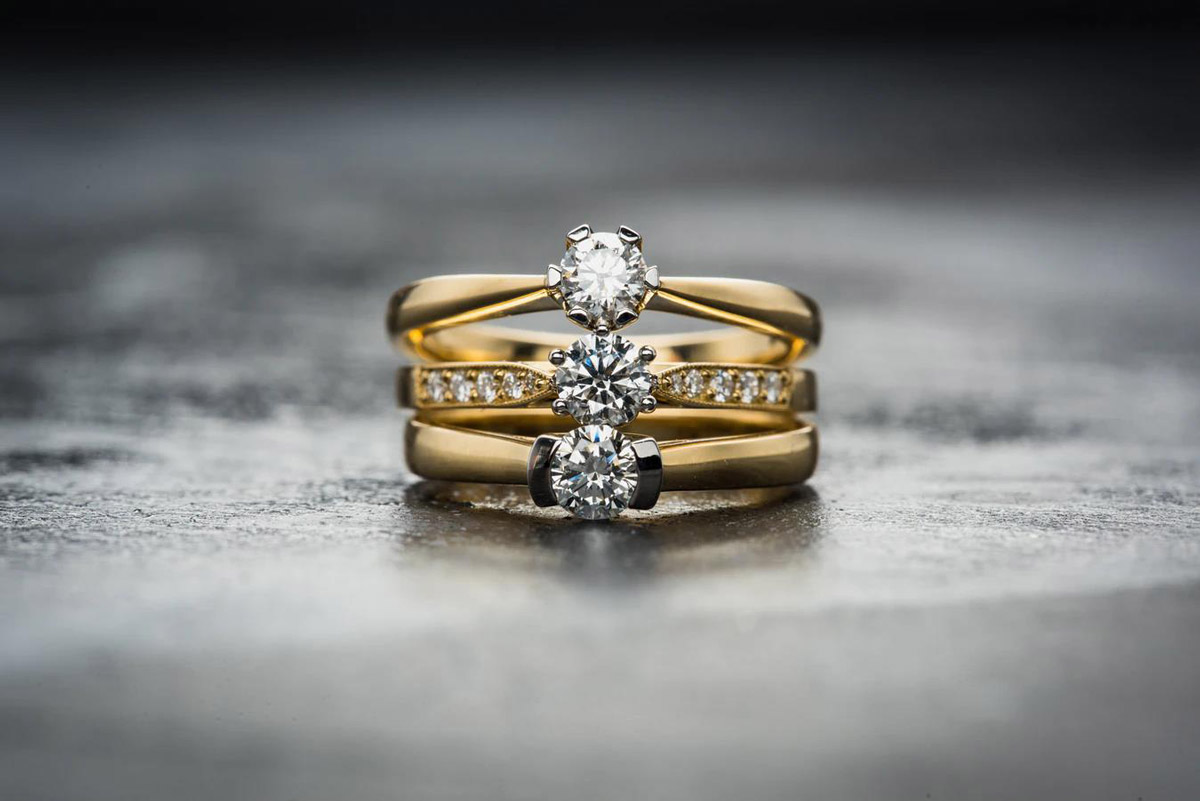
Source: chuttersnap on Unsplash
Whether you’re shopping for an engagement ring, wedding bands, or a simple anniversary gift, knowing how to pick the right diamond is crucial. After all, you wouldn’t want to spend a large sum of money on a diamond only to realise that you splurged on a low-quality gem.
Thus, to avoid such an unfortunate event, we’ll be diving into detail the foundations of basic diamond education: the 4C diamond-grading rubric. These are the four fundamental components of a diamond’s structure that make up its quality.
The 4Cs
Source: Jacek Dylag on Unsplash
Up until the 20th century, there wasn’t an agreed-upon standard by which diamonds could be assessed. On top of the mysteriously-shrouded nature of the diamond procurement process, the lack of transparency made it almost impossible for consumers to gain accessibility and insight into the gem they were about to buy.
That all changed when the Gemological Institute of America (GIA) introduced the globally-accepted standards for describing and accessing diamonds: Cut, Colour, Clarity, and Carat Weight. Now, there is a universal language by which one can describe the quality of a diamond, a language that diamond customers have access to for make informed purchases.
A diamond’s cut
When one thinks about a diamond’s cut, one would naturally imagine its shape (round, oval, pear, marquise, and heart). While this isn’t technically wrong, what the diamond cut actually refers to is how the diamond’s facets interact with light to produce its brightness, fire, and scintillation.
Diamonds are generally graded from excellent to poor, and each grade represents how well the proportions of its facets influence the diamond’s face-up appearance. Naturally, a diamond with an excellent cut will require accurate design and craftsmanship to produce the high-grade sparkle. One that scores low in the cut grade will look dull and dim in comparison.
With that said, remember to take the diamond’s pavilion depth into consideration. A diamond with a pavilion depth that’s too deep or too shallow may allow light to leak from its side or the bottom. A well-cut diamond will instead, direct more light towards the crown, thus giving you the concentrated bling that you desire.
A diamond’s colour
When one looks out for a diamond with a high colour grade, one is actually opting for a diamond that has little-to-no colour! A structurally-perfect and chemically-pure diamond, in fact, has no hue whatsoever.
The GIA diamond colour-grading system measures the degree of colourlessness from D to Z – with D being colourless and Z being a diamond that has a slight colour interference. In most cases, an untrained eye wouldn’t know the difference between two adjacent colour grades. Thus, you may want to consider consulting with an expert jeweller before jumping the gun.
A diamond’s clarity
Many often make the mistake of equating a diamond’s colour with clarity, and often refer to these two attributes interchangeably. However, they’re not the same!
A diamond’s clarity refers to the existence of blemishes and inclusion within the gem. These blemishes and inclusions come about when carbon is exposed to high heat and pressure. Since no diamond can escape from these imperfections, the closer it is from appearing pure and unblemished, the higher its value. After all, these imperfections can significantly affect a diamond’s brilliance and sparkle.
The GIA grades clarity on a scale of ten from FL (Flawless) to I3 (Inclusions 3). Unlike a diamond’s colour, distinguishing and identifying a diamond’s clarity is slightly more straightforward and an I3 diamond appears dull due to the apparent inclusions and blemishes.
A diamond’s carat
If there’s one thing that’s well known among informed and uninformed diamond consumers alike, it is a diamond’s carat weight. The carat weight merely refers to its apparent size. Though it may be tempting to simply judge the overall attractiveness and quality of a diamond based on its size, let’s not forget that a big size doesn’t guarantee a high grade of brilliance, fire, and scintillation. It’s best to consider the other attributes, lest you opt for a big carat diamond that’s also, unfortunately, dull and dim. Trust us when we say that a small but brilliant wedding diamond ring is all you need to attract the attention of many during your wedding reception!

Knowing the 4C diamond-grading rubric will be a tremendous help when you’re purchasing a diamond for yourself or a loved one. Not only will you be exposed to the quality of a diamond, but you will be able to narrow down the options to a diamond that is befitting of your budget. At the end of it all, do remember to have your diamond insured and ask for a diamond certificate from your jewellers!