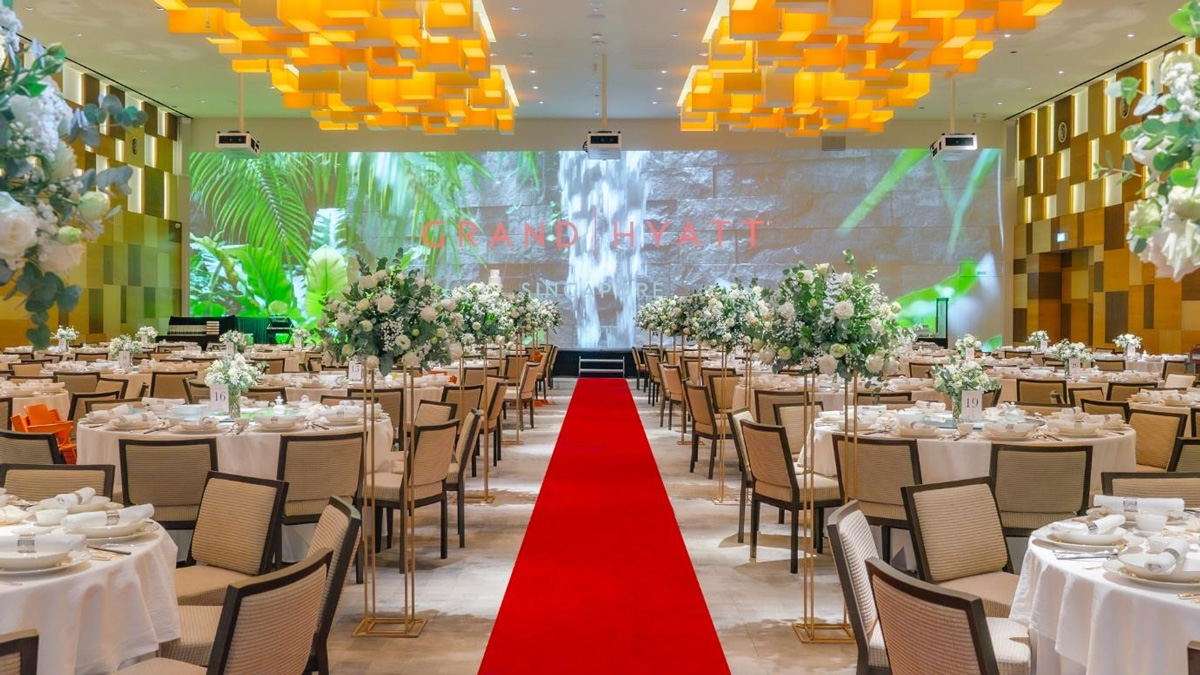

At present, most couples
adopt a modern approach when it comes to the flow of their wedding by merely
incorporating some traditions. Some couples do so for the experience, while
others are committed to adopting traditional practices unique to their
nationality or dialect group. In Singapore, particularly, many couples still
choose to practice some Chinese wedding customs, such as Guo Da Li and Jing
Cha.
Indeed, Chinese weddings
are known for fusing unique customs and traditions. These customs are imbued
with meanings and are usually anchored on traditional Chinese values, such as
loyalty, filial piety, kindness, love, and more.
If you’re planning to
incorporate some Chinese customs into your upcoming wedding, this article might
interest you! Read on to learn more about Guo Da Li and Jing Cha,
two of the most important Chinese wedding customs.
What is Guo Da Li?
In Chinese culture, Guo
Da Li is considered the official wedding proposal and is the first
component of Chinese wedding customs. It is also known as the “betrothal
ceremony” because it involves the giving and receiving of betrothal gifts
between the families of the bride and the groom.
According to Chinese
superstitions, the betrothal ceremony should be conducted on an auspicious day.
In modern times, it usually takes place 1 to 2 weeks before the actual wedding
day.
What Happens During the Guo
Da Li Ceremony?
In a In a Guo Da Li ceremony, it is required for the
groom and his family to deliver to the bride and her family a red packet
containing the betrothal gift money called the “Pin Jin.” Aside from the Pin Jin, there is also a set of other betrothal gifts that must be given
to the bride’s family, including a pair of dragon and phoenix candles, a can of
pig trotters, wine or hard liquor, traditional wedding cakes or Xi Bing,
jewellery for the bride or Si Dian Jin, and more.
Upon receiving the Pin
Jin and other items, the bride and her family shall return a portion
(usually half) of the gifts to symbolise that they’re willing to acknowledge
the generosity of the groom’s family and to “share the joy” with them. Most of
the time, Guo Da Li in Singapore is financed by the couple themselves.
However, in some cases, the parents of both the bride and the groom may also
share the cost of the wedding banquet.
What is Jing Cha?
Jing Cha, or “tea ceremony”, is the
Chinese counterpart to Western solemnisation. It is the formality of
introducing the bride and the groom to the relatives of the couple, not just
their immediate family. It is traditionally done by having the couple “jing
cha” or offer tea to the elder relatives as a way of paying their respects.
Because it is the formal introduction of the bride and the groom, Jing Cha is
considered one of the most significant events at a Chinese wedding.
What Happens During the
Jing Cha Ceremony?
During a usual Jing Cha ceremony, the couple must first serve tea to the groom’s family. They should be
dressed in Gua for this occasion. The sweet tea serves as the symbol of
the harmonious relationship between the couple and their respective families.
It is usually brewed from red dates, lotus seeds, or longans with the tea set
from Guo Da Li. Red dates and lotus seeds signify the couple bearing a
child early in their marriage, while the longans symbolise a “dragon” wanting
to have a male child.
Although the tradition is
that the couple arrives at the groom’s house first, some couples may choose to
conduct the tea ceremony for the bride before leaving for the groom’s house. In
some instances, the couple may even do the ceremony together at the wedding
banquet area before the banquet begins. Traditionally, the newlyweds are
required to kneel when serving the tea. However, most modern families now only
require the newlyweds to bow while standing.
Conclusion
Even though modern
adaptations of Chinese wedding customs are becoming increasingly common in
Singapore, it’s always a good idea to backtrack and understand better why some
customs and traditions are done, and which of them continue to be a significant
part of modern Chinese weddings. If you wish to incorporate a bit of tradition
into your upcoming wedding, Guo Da Li and Jing Cha are two of the
essential Chinese customs you should consider incorporating.
Should you require assistance
with carrying out a Guo Da Li ceremony, Blissful Brides is here for you!
Blissful Brides is a reputable wedding guide in Singapore that offers an array of
excellent complimentary concierges to help you plan successful traditional
Chinese ceremonies and weddings without much hassle. Get a quote from us now,
so we can start planning and preparing for your auspicious Guo Da Li ceremony or wedding!